Taking care of your grand piano involves only a few simple steps that can have a lasting impact on the health and performance of your instrument. Use these five piano care tips to keep your piano in top condition.
1. Keep Liquids Away From Your Piano
If you love to play your piano first thing in the morning, keep your coffee mug and cereal bowl on the side table, not on the lid of your grand piano. If liquids spill on your piano, it can cause serious damage to the interior and exterior components. Spilled liquids can stain the surface of your piano and cause the wood to warp. If liquid seeps between the piano keys, it can cause the keys to stick or even cause mold to grow inside the piano.
Avoid placing drinks or other liquids near your piano and never place any liquids on top of your grand piano. If a drink does spill on your piano, wipe it up immediately using a soft and absorbent cloth. If the spill is on the piano keys, be careful not to press down any of the keys while wiping to avoid causing the liquid to drip further into the piano. For spills on the keys, contact a piano technician to perform proper cleaning and prevent further damage.
2. Dust and Clean Your Piano Regularly
Clean your piano regularly to prevent dust and dirt from accumulating on the surface or clogging the keys. Dust inside of your piano may also cause noise or dull the action of the hammers.
Begin by dusting the exterior and keys of the piano using a feather duster or soft cloth. Because dust is abrasive, it can scratch the finish if it is not removed first. You may choose to lightly dampen the cloth first to pick up dust, then follow with a dry cloth to remove excess moisture. Always wipe in the direction of the wood grain, using long and straight strokes.
After dusting, clean the exterior of the piano using a soft cloth and mild soap solution to remove dirt, smudges and fingerprints. Dampen the cloth with the soapy water, then wring it out thoroughly — using a cloth that is too wet can cause water damage. Wipe in straight strokes with the grain rather than in circles, which can leave swirl marks. Use light pressure and a soft microfiber cloth to avoid scratching the piano’s finish.
To clean the keys, wipe them with a dry lint-free cloth. If the keys are very dirty, you can clean them with a damp cloth using a mild soap solution. However, never use the same cloth to clean the white and black keys, or to clean the keys and the exterior of the piano. Dry the keys immediately to prevent water damage. You can also use compressed air to remove dust from between the piano keys.
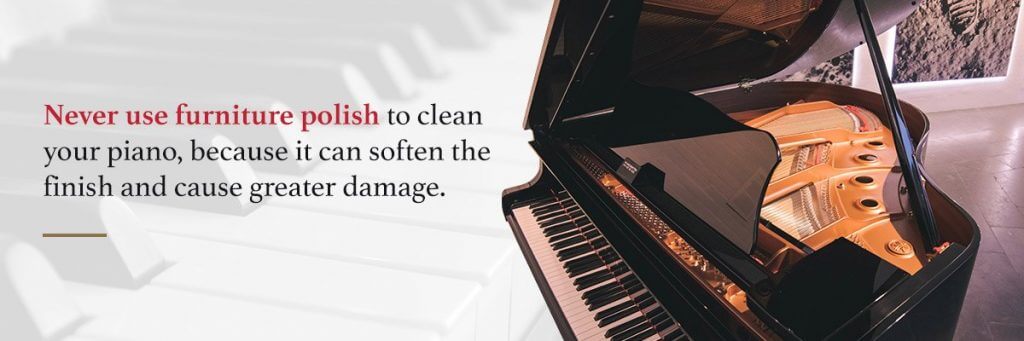
Never use furniture polish to clean your piano, because it can soften the finish and cause greater damage. Alcohol-based cleaners can also cause the piano keys to crack.
It’s best to leave cleaning the inside of your piano to the professionals. A professional cleaning service will remove dust and dirt without damaging any delicate internal components.
3. Cover the Keys After Use
If dirt and dust accumulate between your piano keys, it can cause the keys to stick. Covering the keys after every use helps keep pet hair and dust from getting trapped between the keys. It also protects the keys from any accidental spills.
If your piano does not have a key cover, you can purchase one from a music store for an affordable price. You can also cover your entire piano with a drop cloth when not in use.
Another great tip for keeping your piano keys clean is to always wash your hands before playing. Although your hands will always leave some oil residue on the piano keys, this can be greatly reduced by a quick hand washing prior to sitting down to play.
4. Avoid Placing Objects on Your Piano
Although a vase of flowers or potted plant may look nice on top of your grand piano, they can also cause serious damage. Condensation from flower vases or drinks can leave watermarks on the lid of your grand piano and ruin its finish. A heavy potted plant can stress the wood and cause noisy rattling when the piano is played.
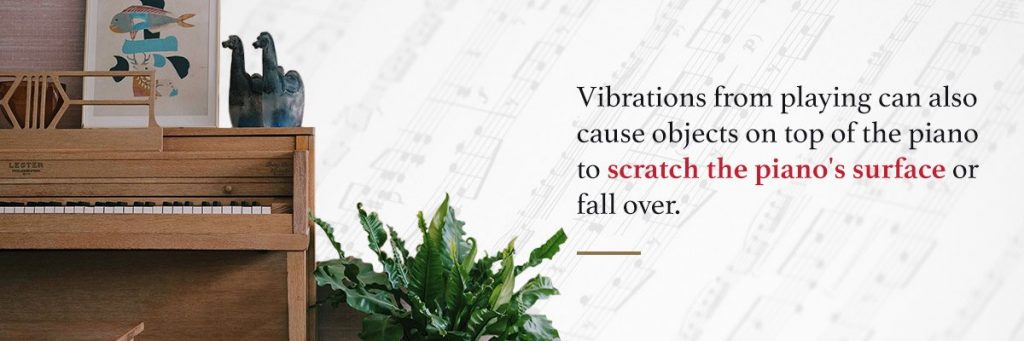
Vibrations from playing can also cause objects on top of the piano to scratch the piano’s surface or fall over. Flower vases may also splash water onto the piano during an enthusiastic practice session.
If you want to place something on your piano, like a piano lamp, picture frame or another lightweight decoration, place a soft cloth or piece of felt underneath to prevent scratches. This will also help dampen any noisy vibrations.
5. Play Your Piano Regularly
Another important aspect of piano care is to play your piano regularly. Playing your piano at least once a week helps keep the moving parts in good working condition and prevents dust from settling inside your piano or piano keys.
When you play your piano often, you are also more likely to notice when something is not right. You will be more aware of tuning issues and other common piano problems that impact the sound or playability of your instrument. Playing your piano regularly also encourages regular servicing which can significantly increase the lifespan of your piano.
Servicing Your Piano
Servicing your piano regularly keeps it in tune, operating smoothly and producing a beautiful sound. Certified piano technicians are also able to recognize any potential problems with your piano before they become more serious issues. By performing preventative piano maintenance, you can avoid costly repairs and headaches down the road.
The three key aspects of good piano maintenance are tuning, voicing and regular technician visits.
1. Perform Tuning Regularly
Pianos naturally slide out of tune over time because of being played and environmental conditions. Because this happens gradually, you may not even notice your piano is out of tune until you play with another musician or until you hear its tone improve drastically after a tuning.
Playing your piano when it is out of tune can cause wear and tear on the instrument, making tuning an important part of piano care. Most pianos should be tuned twice a year to maintain their sound quality and pitch. Some pianos, such as older models, may need to be tuned more frequently. If you play your piano every day, this may also cause it to go out of tune more quickly.
It is recommended to tune your piano a minimum of twice a year. During spring and summer when you switch from heat to air conditioning, the humidity levels in your home change, causing the piano to swell or shrink which causes the piano to go out of tune. Maintaining a level tuning pitch is vital to the health of your piano.
2. Perform Voicing as Necessary
If you want your piano to sound its very best, voicing should also be performed in addition to tuning. Voicing involves making adjustments to various parts of your piano to improve its overall sound quality. This can include changing the level of the strings, adjusting the hardness of the hammers, reshaping the hammers and many other alterations to produce the precise tonal quality you want from your grand piano.
Voicing can be performed to adjust your piano’s sound quality to match your personal preferences, or it may be necessary to address specific tonal problems. For example, if the tone of your piano is noticeably different between notes or if your piano cannot play softly, it may need a voicing adjustment.
3. Schedule Regular Technician Visits
When you care for your piano properly and play it regularly, you will become familiar with the unique quirks of your instrument. You will notice when something seems amiss with your piano’s sound or performance. If there seems to be a problem with your piano, do not hesitate to schedule an inspection with a piano technician. A professional piano technician will be able to identify, diagnose and correct the problem quickly.
Even when your piano seems to be playing properly, regular visits from a piano technician can ensure its continued excellent performance. Piano technicians are trained to recognize potential problems with your piano and take action to protect against future damage. When progressive problems are caught and corrected early, your piano will play beautifully for years to come.
At West Georgia Piano Tuning, we offer professional piano maintenance and repairs, as well as many other in-home piano services to keep your instrument in its best condition. Through routine tunings and check-ups, the technician can help protect your piano from damage and maintain its high-quality sound. Backed by extensive experience servicing top piano brands, West Georgia Piano Tuning is a trusted name in piano care. Contact us for more information about piano care and maintenance.
4. Pitch Raise
If your piano has gone a decade or more without tuning, a pitch raise will be required to get the piano back up to pitch before it can be tuned.